
Nigerian Sesame Seed Grades and Specifications: Purity, Moisture, Oil and What 99/1/1 Means
Sesame offers are full of shorthand — 99/1/1, whitish, Sortex, FAQ. Here is what each term means in a Nigerian sesame specification and how to write one that protects you.
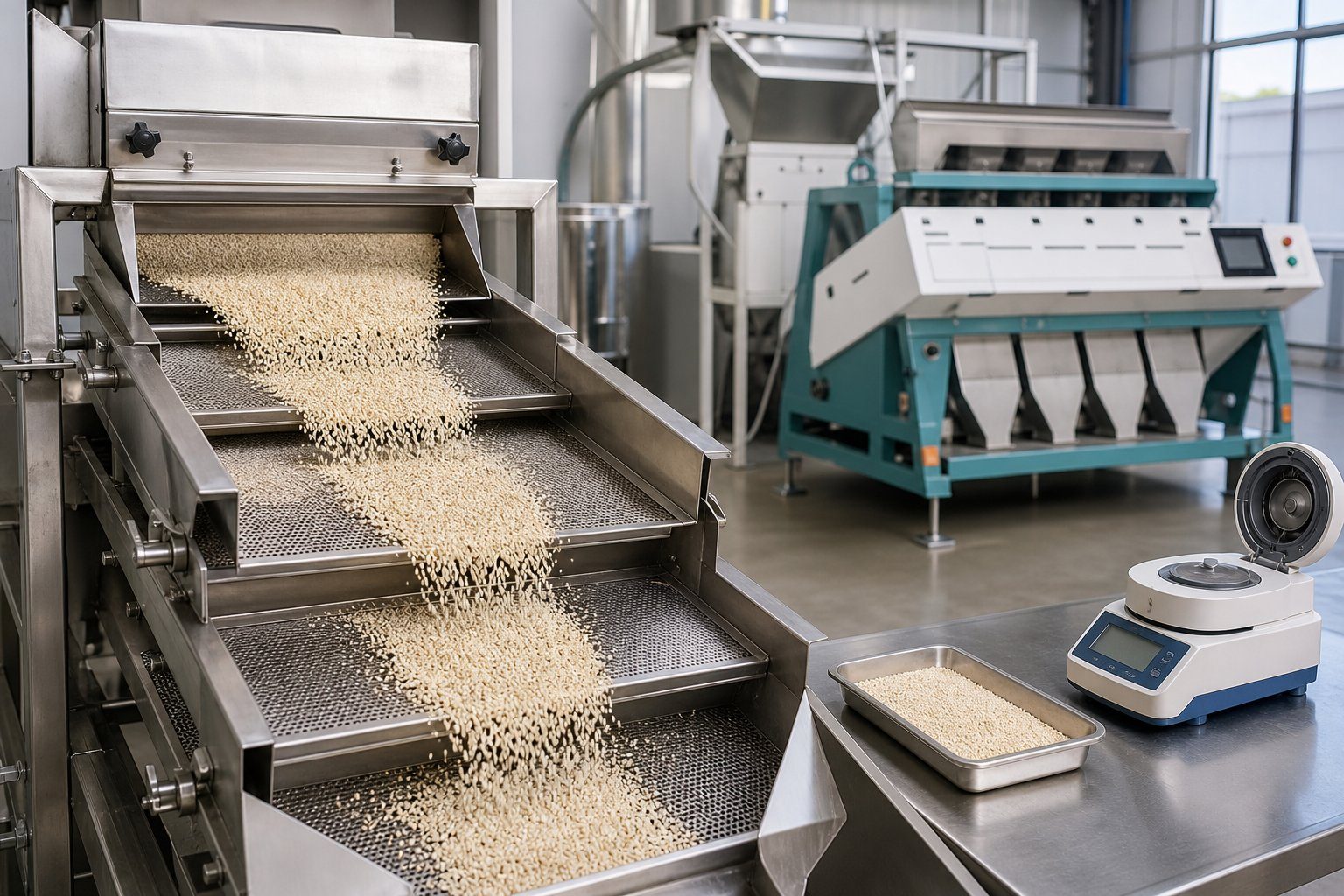
Unlike cocoa, sesame has no single international grading authority. Quality is defined contract by contract, using a handful of parameters that every experienced buyer and seller understands. This guide explains them so that you can read a Nigerian sesame offer — and write a specification — with confidence.
Colour and type
- Natural white / whitish — cream to pale-tan seed, mostly from Benue, Nasarawa and Taraba. Food grade; the premium Nigerian product.
- Brown / mixed — darker, often slightly higher in oil, from Kano, Jigawa, Katsina, Gombe and the far north. Oil-crushing grade.
- Sortex / colour-sorted — natural white that has been optically sorted to remove black, dark and discoloured seeds. Required by Japan, Korea and premium EU buyers.
- Hulled — seed coat removed; pearl-white kernel. A processed ingredient rather than a raw commodity.
The core parameters
| Parameter | Typical Nigerian contract range | Why it matters |
|---|---|---|
| Purity | 98% – 99.5% min (99.5%+ Sortex; 99.9% hulled) | Share of the weight that is sound sesame seed |
| Admixture / foreign matter | 0.5% – 2% max | Dust, stones, stems, other seeds — processing loss and contamination risk |
| Moisture | 6% – 8% max | Above limit, seed heats and moulds in transit; you also pay for water |
| Oil content | 48% – 52% min | The economic driver for crushers; also indicates maturity |
| Free fatty acid (FFA) | 2% max (lower for food use) | Rancidity; rises with poor drying and storage |
| Aflatoxin (total / B1) | Per destination (e.g. EU 4 / 2 ppb; Japan 10 ppb total) | Food-safety limit; non-compliance means rejection |
| Salmonella | Absent in 25 g | Mandatory for EU and most food-grade buyers |
| Pesticide residues | Within destination MRLs | Especially scrutinised by EU and Japan |
What "99/1/1" means
Shorthand such as 99/1/1 is widely used in the sesame trade and is read as: 99% purity, 1% maximum admixture, 1% maximum free fatty acid. Variants such as 98/2/2 or 99.5/0.5/1 follow the same pattern. The shorthand is a useful starting point, but it does not cover moisture, oil, aflatoxin or microbiology — so a complete specification should always list those separately.
Writing a specification that protects you
- State type and colour explicitly ("natural whitish sesame, Benue type"), not just "sesame seeds".
- Give each parameter a number and a test method (e.g. moisture max 7%, ISO 665).
- Name the laboratory or inspection agency whose result is binding.
- Set aflatoxin, Salmonella and residue limits to your destination's regulations, not generic figures.
- Agree sampling at loading — the only point at which the seller can still act.
Renamy Sesame Nigeria contracts against a written specification and confirms it by laboratory analysis and FPIS grading on every lot. See our sesame grades or request a quotation.
Sourcing sesame seeds from Nigeria?
Get a written quotation and specification within two business days.
More Insights
Ready to Source Export-Grade Sesame Seeds from Nigeria?
Tell us your grade, tonnage, packing and destination port. Our export team will prepare a detailed FOB or CIF quotation and a sample plan.