
Quality Assurance
Sesame quality is decided on the drying floor, on the cleaning line and at the laboratory bench — long before a container is sealed. Here is how we control it.
Specify. Clean. Test. Document. Repeat.
We do not rely on the grading certificate alone. Quality is built through a sequence of checks, each catching problems that would be expensive to find at your border or your factory.
Every order starts with a written specification: type and colour, purity, admixture, moisture, oil content, FFA and the food-safety limits of your market. From there our team applies checkpoints at buying, on intake, during cleaning and at bagging. An accredited laboratory analyses each lot, the Federal Produce Inspection Service grades it before export, and we actively support third-party inspection by the buyer's nominated agency.
- Written spec per contract
- Farmer-group selection
- Drying & storage supervision
- Intake moisture, purity & colour
- Cleaning & colour sorting to spec
- Laboratory analysis per lot
- FPIS grading certificate
- Loading photographs & report
Six Stages of Control
1. Farm & Harvest
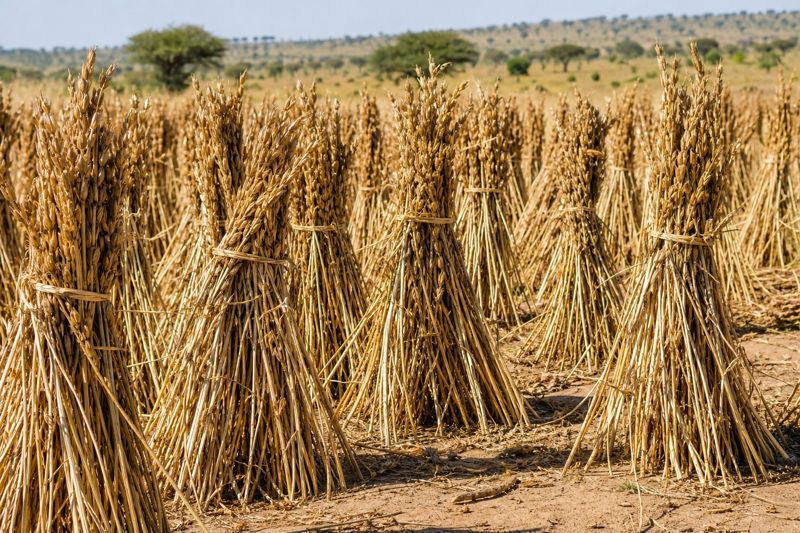
We buy from farmer groups that harvest at maturity, stook plants to dry off the ground and thresh onto tarpaulins. Seed dried on bare earth picks up the soil, stones and moulds that cause rejections.
2. Intake Check
Every lot arriving at the warehouse is checked for moisture, purity, colour mix, live insects and off-odours before acceptance. Damp or infested lots are rejected or re-dried and treated before entering stock.
3. Cleaning & Sorting
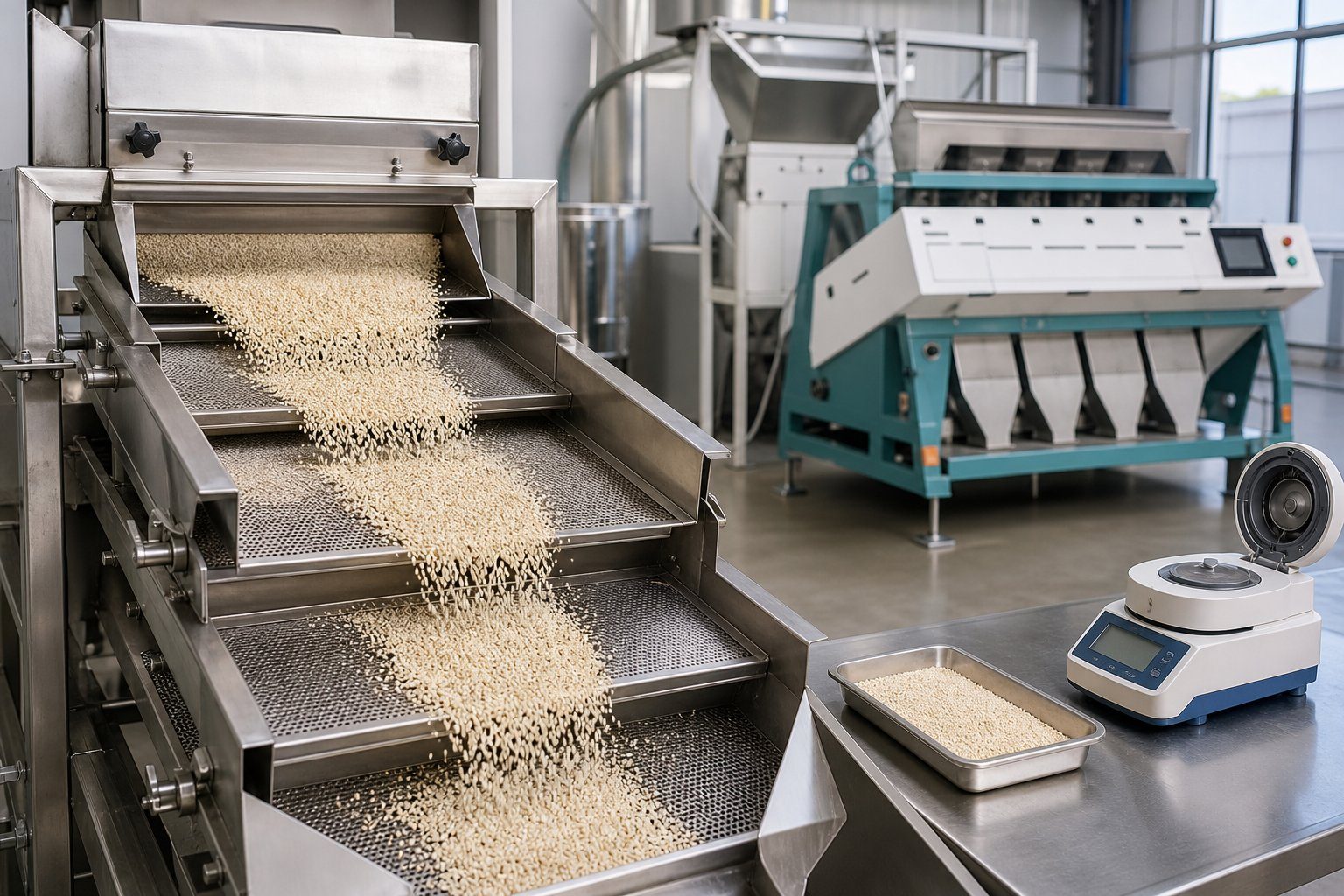
Pre-cleaning screens remove stems and dust, de-stoners and gravity tables remove stones and immature seed, and optical sorters eject black, dark and discoloured seed for premium grades.
4. Laboratory Analysis
Representative samples from each lot go to an accredited laboratory for moisture, purity, oil, FFA, aflatoxin and — as your market requires — Salmonella and multi-residue pesticide screening.
5. FPIS Grading & Fumigation
The Federal Produce Inspection Service samples bagged lots and issues the grading certificate. Bagged stock and containers are fumigated under certificate by a licensed operator.
6. Loading Inspection
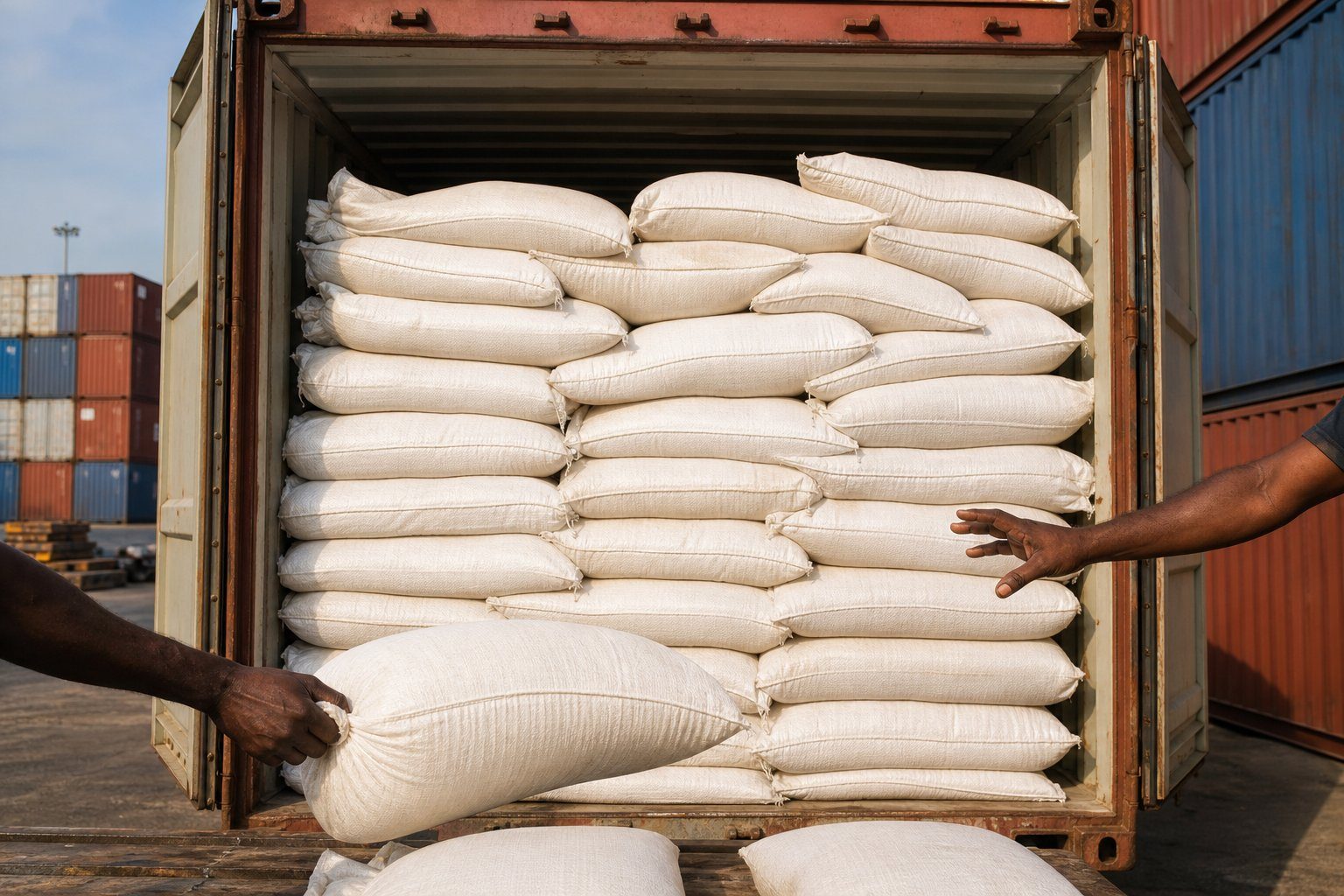
Bag counts, weights, container cleanliness, lining and desiccant are verified at stuffing. Photographs and a loading report accompany the shipping documents.
What the Numbers Mean
The parameters that define export-grade sesame seeds, and why each one matters to your process and your border authority.
| Parameter | What it tells you | Why it matters | Method |
|---|---|---|---|
| Purity | % of sound sesame seed by weight | What you are paying for; 98–99.5% natural, 99.9% hulled | Sieve & hand-pick analysis |
| Admixture / foreign matter | Dust, stones, stems, other seeds | Processing loss, equipment wear, contamination risk | Visual & sieve |
| Moisture | Water content of the seed | Above limit, seed heats, moulds and develops FFA in transit | ISO 665 / calibrated meter |
| Oil content | % extractable oil | The economic figure for crushers; indicates maturity | ISO 659 (Soxhlet) |
| Free fatty acid | Degradation of the oil | Rancidity and refining loss; rises with poor drying and storage | ISO 660 |
| Aflatoxin | Mould toxin (B1, total) | Legal food-safety limit; non-compliance means rejection | HPLC, accredited lab |
| Salmonella | Presence in 25 g sample | Mandatory absent for EU and most food-grade buyers | ISO 6579, accredited lab |
| Pesticide residues | Residue levels vs. MRLs | EU and Japan positive-list compliance | Multi-residue screen (LC/GC-MS) |
| Colour & black seed % | Share of dark / off-colour seed | Appearance scoring in Japan, Korea and premium markets | Visual count on sample |
Third-Party Inspection Welcome
For first orders, letters of credit or large programmes, many buyers appoint an independent inspection company. We welcome it. Agencies such as SGS, Bureau Veritas, Intertek and Cotecna can be engaged to draw samples, perform purity and moisture analysis, send samples to the laboratory, verify weights and bag counts, and supervise container stuffing and sealing, with testing to the standard you specify.
We coordinate access, scheduling and sampling with the inspector and build the inspection and laboratory timeline into the shipment plan so that it does not delay the vessel booking. Inspection fees are normally for the buyer's account unless otherwise agreed.
Protecting the Seed Between Lagos and Your Factory
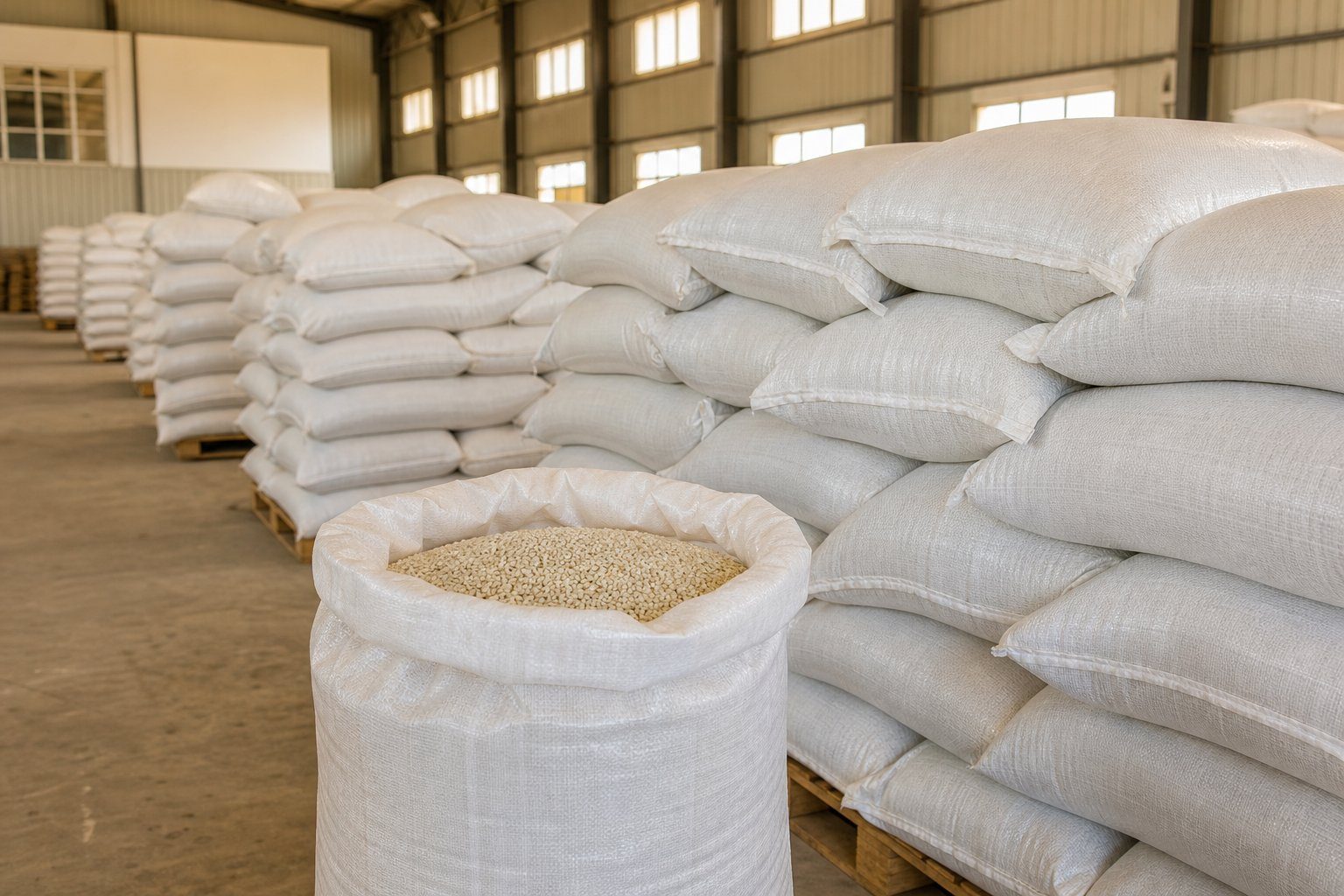
Sesame is an oilseed: too much moisture and it heats, moulds and turns rancid; too much condensation and bags on the container walls get wet. We ship only seed at or below the contracted moisture, line containers with kraft paper, place desiccant in each container and stow bags away from the walls and roof.
Containers are fumigated under certificate before departure, and we recommend buyers inspect and ventilate promptly on arrival. These practices protect your cargo, your oil quality and your delivery schedule.
Have a Specification to Meet?
Send us your target purity, moisture, oil and food-safety limits. We will tell you plainly which grade meets them and how we will prove it.